Walking is one of the simplest ways to stay active, but step counts can sometimes be confusing. If your fitness tracker says you have completed 7,000 steps, you may wonder exactly how far you have walked. So, how many miles is 7K steps?
For most people, 7,000 steps is approximately 3 to 3.5 miles. However, there is no single exact distance because the number of miles depends on factors such as height, stride length, walking speed, and whether you are walking on flat ground or over hills.
Understanding the relationship between steps and miles can make it easier to set realistic fitness goals. Whether you are trying to become more active, improve your daily walking routine, or simply understand your fitness tracker, knowing what 7,000 steps represents can be useful.
How Many Miles Is 7K Steps?
For the average adult, 7,000 steps generally equals around 3.0 to 3.5 miles.
A commonly used estimate is:
7,000 steps ≈ 3.2 miles
This is only an approximation. Two people can walk exactly 7,000 steps and cover different distances because their stride lengths may not be the same.
For example, a person with a shorter stride may need more steps to walk one mile, while someone with a longer stride may cover the same mile with fewer steps.
A Simple Conversion
Here is a general estimate:
| Steps | Approximate Distance |
|---|---|
| 1,000 steps | 0.4–0.5 miles |
| 2,000 steps | 0.8–1.0 miles |
| 3,000 steps | 1.2–1.5 miles |
| 4,000 steps | 1.7–2.0 miles |
| 5,000 steps | 2.1–2.5 miles |
| 6,000 steps | 2.5–3.0 miles |
| 7,000 steps | 3.0–3.5 miles |
| 8,000 steps | 3.4–4.0 miles |
| 10,000 steps | 4.2–5.0 miles |
These figures are useful for general planning, but your personal distance may be slightly higher or lower.
Why 7,000 Steps Does Not Equal the Same Miles for Everyone
The biggest reason step-to-mile conversions vary is stride length.
Stride length is the distance you travel with each step. Taller people often have longer strides, although individual walking styles can vary considerably.
Imagine two people walking 7,000 steps. One person may have an average step length of 2.1 feet, while another may have a step length of 2.5 feet. Even though both complete the same number of steps, the second person will generally travel farther.
Other factors can also influence the distance.
Height and Leg Length
Height can affect stride length. Taller people generally take longer steps, while shorter people may naturally take shorter steps.
However, height is not a perfect predictor. Fitness level, posture, mobility, and walking habits can all affect how long each step is.
Walking Speed
Your walking speed can also influence your natural stride. A relaxed stroll may involve shorter steps, while brisk walking can produce a longer stride.
This means two people walking 7,000 steps at different speeds could cover somewhat different distances.
Terrain
Walking on a treadmill, pavement, grass, sand, hills, or uneven trails can change your stride and step pattern.
For example, walking uphill may cause you to take shorter steps. Trail walking can also produce a different step pattern than walking on a smooth sidewalk.
How to Calculate Your Personal Distance
If you want a more personalized answer to how many miles is 7k steps, you can estimate your stride length.
A simple method is to measure how far you travel over a known distance while counting your steps.
For example, walk a measured 100 feet and count your steps. Then divide the distance by the number of steps to estimate your average step length.
Once you know your average step length, you can use this basic formula:
Distance = Number of Steps × Step Length
You can then convert the result from feet into miles.
For example, if your average step length is 2.3 feet:
7,000 × 2.3 = 16,100 feet
Since one mile contains 5,280 feet:
16,100 ÷ 5,280 ≈ 3.05 miles
So, someone with a 2.3-foot average step length would walk approximately 3.05 miles in 7,000 steps.
How Long Does It Take to Walk 7,000 Steps?
The amount of time needed to complete 7,000 steps depends mainly on your walking speed.
For many people, 7,000 steps may take approximately 60 to 90 minutes when completed as one continuous walk. A faster walker may finish sooner, while someone taking a relaxed pace may need longer.
You also do not have to complete all 7,000 steps at once.
You could divide them throughout your day:
- 1,500 steps in the morning
- 1,500 steps during lunch or breaks
- 2,000 steps in the afternoon
- 2,000 steps in the evening
Breaking your walking into smaller sessions can make a daily step goal feel much more manageable.
Walking Pace Matters
A leisurely walk and a brisk walk are very different activities.
At a comfortable pace, you may be able to talk easily while walking. A brisk pace generally feels more energetic and may increase your breathing and heart rate.
If your goal is simply to increase daily movement, consistency is often more important than trying to walk every step quickly.
How Many Calories Does 7,000 Steps Burn?
There is no universal calorie number for 7,000 steps.
Calorie expenditure depends on several factors, including:
- Body weight
- Walking speed
- Terrain
- Walking duration
- Fitness level
- Age
- Individual metabolism
As a broad estimate, 7,000 steps may burn a few hundred calories, but the exact amount can vary substantially from person to person.
Fitness watches and smartphone apps often estimate calorie expenditure using personal information such as weight, height, age, and activity data. These estimates are useful for tracking trends but should not be treated as perfectly precise measurements.
Does Walking 7,000 Steps Help With Weight Management?
Regular walking can contribute to weight management because it increases daily energy expenditure.
However, weight change is influenced by overall energy balance, nutrition, sleep, activity levels, and many other factors. Walking 7,000 steps should therefore be viewed as one part of an active lifestyle rather than a guaranteed weight-loss formula.
For someone who currently takes only a few thousand steps per day, gradually increasing movement can be a practical way to become more active.
Is 7,000 Steps a Good Daily Goal?
Yes. 7,000 steps can be a practical daily movement goal for many adults.
The popular 10,000-step target is often treated as a universal requirement, but people do not necessarily need to reach exactly 10,000 steps every day to benefit from being active.
A 7,000-step target can be particularly useful if you are building a walking habit. It provides a measurable goal without requiring you to spend your entire day exercising.
The most appropriate target depends on your current activity level, lifestyle, and personal circumstances.
Start With Your Current Step Count
If you currently average 3,000 steps a day, suddenly aiming for 7,000 may feel difficult.
Instead, increase your daily movement gradually.
For example:
Week 1: 3,500 steps
Week 2: 4,000 steps
Week 3: 4,500 steps
Week 4: 5,000 steps
You can continue increasing your target as the routine becomes comfortable.
Simple Ways to Reach 7,000 Steps
Reaching 7,000 steps does not necessarily require a dedicated gym workout. Small changes throughout your day can add up quickly.
Take Short Walking Breaks
If you work at a desk, stand up and walk around for a few minutes every hour or two.
Walk While Making Phone Calls
Instead of sitting during a phone conversation, walk around your home, office, or another suitable area.
Park Farther Away
When appropriate, parking slightly farther from your destination can add extra steps to your day.
Choose the Stairs
Taking stairs instead of an elevator can increase your daily movement and add a little extra challenge.
Take an Evening Walk
A 15- to 30-minute evening walk can be an easy way to increase your step count while relaxing after a busy day.
7K Steps vs. 10K Steps
Many people wonder whether 7,000 steps is enough compared with the traditional 10,000-step target.
The difference is straightforward:
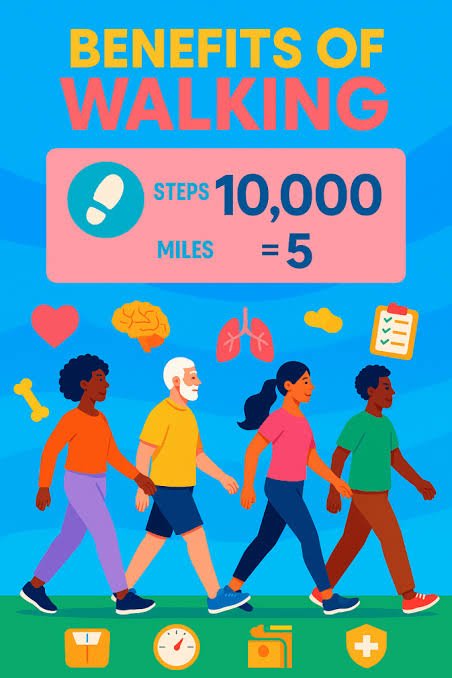
7,000 steps: approximately 3–3.5 miles
10,000 steps: approximately 4–5 miles
The extra 3,000 steps may represent roughly another 1.3–1.5 miles, depending on stride length.
Rather than becoming overly focused on a particular number, consider your overall activity. A consistent 7,000-step routine may be more realistic and sustainable than setting a 10,000-step goal that you rarely achieve.
How Accurate Are Step Counters?
Modern smartphones, smartwatches, and fitness trackers can provide useful estimates of daily steps. However, no consumer tracker is perfectly accurate in every situation.
Accuracy can be affected by:
- Where the device is worn
- Arm movement
- Walking speed
- Device settings
- Type of activity
- Sensor technology
For the best results, use the same device consistently and focus on long-term trends rather than worrying about every individual step.
Frequently Asked Questions
1. Is 7,000 steps equal to 3 miles?
Approximately. For many adults, 7,000 steps is around 3 to 3.5 miles. Your exact distance depends largely on your stride length.
2. How many miles is 7K steps for a shorter person?
A shorter person may cover slightly less distance in 7,000 steps because their average stride may be shorter. However, individual walking patterns vary, so measuring your personal stride provides a better estimate.
3. How long does 7,000 steps take?
For many people, 7,000 steps may take roughly 60 to 90 minutes if completed through continuous walking. The actual time depends on walking speed and stride.
4. Is walking 7,000 steps every day healthy?
For many people, reaching 7,000 steps can be a useful way to increase daily physical activity. The ideal activity level varies from person to person, so consistency and overall lifestyle matter more than one specific step number.
5. Can 7,000 steps help with weight loss?
Regular walking can support weight management by increasing physical activity and energy expenditure. However, weight loss depends on several factors, including overall diet, activity, and energy balance.
Conclusion
So, how many miles is 7K steps? For most people, the answer is approximately 3 to 3.5 miles, with about 3.2 miles being a useful general estimate.
Your actual distance can differ depending on your height, stride length, walking pace, terrain, and individual walking style. If you want the most accurate answer, measuring your personal stride length and using it to calculate your distance is the best approach.
More importantly, 7,000 steps can be a realistic and achievable daily movement target. You can reach it through short walks, active breaks, errands, household activities, and dedicated walking sessions. Instead of worrying about hitting a perfect number every day, focus on building a consistent routine that fits your lifestyle.
Whether you are aiming for better fitness, more daily movement, or simply trying to understand what your fitness tracker means, 7,000 steps is a useful benchmark—and for the average person, it represents roughly three-plus miles of walking.