Introduction
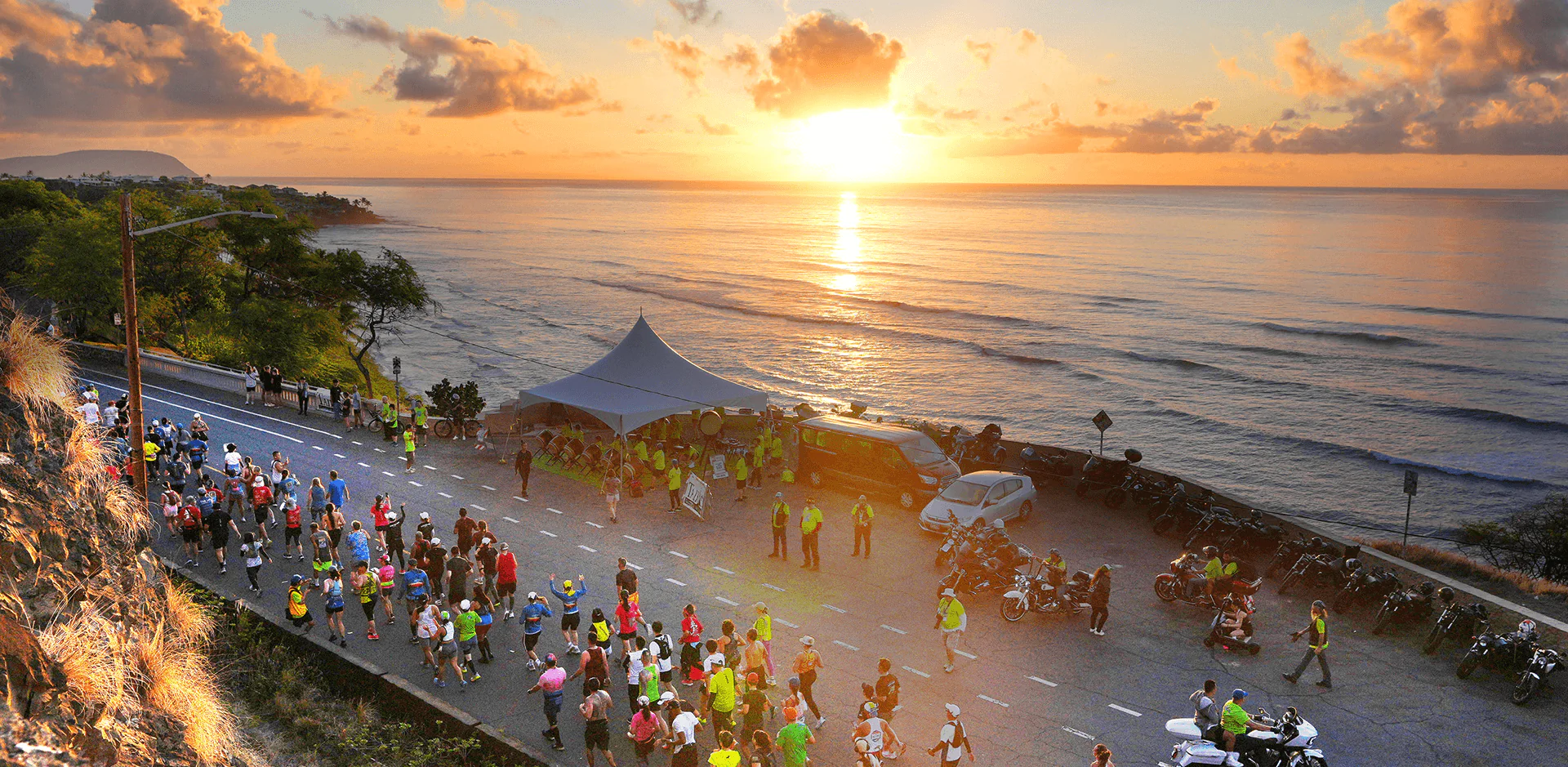
The Honolulu Marathon is one of the most recognizable marathon events in Hawaii, combining a challenging 26.2-mile course with ocean views, tropical scenery, Waikiki landmarks, and the welcoming atmosphere associated with the Aloha spirit. Unlike many major marathons, the event does not require runners to achieve a qualifying time, and the official race has no course time limit.
The 2026 JAL Honolulu Marathon is scheduled for Sunday, December 13, 2026, beginning at 5:00 a.m. in Honolulu. The marathon weekend also includes the Kalakaua Merrie Mile and the Start to Park 10K, giving visitors several ways to participate.
For runners traveling to Hawaii, the race can be more than a single morning of competition. It can become a complete vacation experience involving beaches, sightseeing, local food, cultural attractions, and several days of preparation before race morning.
Whether you are considering your first marathon, planning a destination race, or simply researching the Honolulu Marathon, this guide explains what to know about the event, course, registration, training, travel, and race-day experience.
What Is the Honolulu Marathon?
The Honolulu Marathon is an annual 26.2-mile road race held in Honolulu, Hawaii. The event dates back to 1973, and official historical statistics document decades of participation and race results.
Over the years, the marathon has developed a strong international following. Japan has historically represented a significant portion of the field, while runners also travel from the U.S. mainland, Hawaii, and many other countries.
The race is particularly distinctive because it combines a major-city marathon environment with Hawaii’s coastal landscape. Instead of running through a conventional urban course from start to finish, participants experience downtown Honolulu, Waikiki, Diamond Head, Kahala, Hawaii Kai, coastal highways, and Kapiolani Park.
The official organization describes the event as welcoming to runners, walkers, and participants of different experience levels. There is also no qualifying time or lottery requirement for the marathon.
Honolulu Marathon 2026 Date and Start Time
The 2026 Honolulu Marathon will take place on:
- Date: Sunday, December 13, 2026
- Start time: 5:00 a.m.
- Distance: 26.2 miles
- Start: Ala Moana Boulevard/Queen Street area
- Finish: Kapiolani Park
- Location: Honolulu, Hawaii
All participants are scheduled to start at 5:00 a.m., with runners assigned to designated start groups. The official event information recommends arriving early because of the large field and race-morning access procedures.
The early start is an important part of the Honolulu Marathon experience. It allows runners to cover some of the course before the strongest daytime heat and provides a memorable atmosphere as the city begins waking up.
Honolulu Marathon Course
One of the biggest attractions of the race is its scenic course.
The marathon starts near Ala Moana Beach Park and moves through several well-known parts of Honolulu before returning toward Waikiki and the finish at Kapiolani Park.
Downtown Honolulu
The early portion of the course takes runners through downtown Honolulu. Participants pass landmarks including Honolulu Harbor, Aloha Tower, Chinatown, Iolani Palace, King Kamehameha’s statue, Kawaiahao Church, and Honolulu Hale.
This section gives runners an opportunity to see some of the city’s historic architecture while settling into their race pace.
Waikiki and Diamond Head
The course then moves toward Waikiki, one of Oahu’s best-known tourist districts.
Runners travel along areas associated with Waikiki Beach before heading toward Diamond Head. The route around Diamond Head provides some of the most recognizable scenery of the marathon, although runners should be prepared for short uphill sections in this part of the course.
Diamond Head is a volcanic crater and one of the most famous natural landmarks on Oahu. Seeing it during a marathon gives this section of the race a distinctive character.
Kahala and Hawaii Kai
After the Diamond Head area, the route continues through Kahala and along Kalanianaole Highway toward Hawaii Kai.
This portion is important for marathon strategy because participants are well into the race by this point. The scenery remains attractive, but fatigue can become a major factor.
The course passes coastal areas and communities including Waialae Iki, Aina Haina, Niu Valley, and Hawaii Kai before turning back toward Honolulu.
The Final Miles
The final section brings runners back through the Diamond Head and Waikiki area.
The route eventually reaches Kapiolani Park, where the finish line is located near the park bandstand. The finish provides a dramatic conclusion to a course that combines city streets, residential neighborhoods, coastal views, and famous Oahu landmarks.
Is the Honolulu Marathon Difficult?
The answer depends on your experience, preparation, weather conditions, and race goals.
The Honolulu Marathon does not have the same profile as a flat indoor track race. Participants encounter gradual changes in elevation, some hills, long coastal sections, and the possibility of warm or humid conditions.
However, the race is accessible to a broad range of participants because there is no qualifying time and no official cutoff time. The event’s organizers specifically highlight the opportunity to run, walk, or move at an individual’s own pace.
That does not mean preparation is unnecessary. Completing 26.2 miles is a substantial physical challenge regardless of the course.
Honolulu Marathon Registration
Registration for the December 13, 2026 Honolulu Marathon is open through the official event registration system. Participants select their appropriate registration category and distance when entering.
The marathon weekend includes three primary in-person events:
- JAL Honolulu Marathon — 26.2 miles
- Start to Park 10K — 6.2 miles
- Kalakaua Merrie Mile — 1 mile
The Kalakaua Merrie Mile takes place on Saturday, December 12, while the marathon and Start to Park 10K take place on Sunday, December 13.
Registration prices can change as different entry periods open, so runners should check the official registration page for the latest fee applicable to their residency category and registration date.
Who Can Enter the Honolulu Marathon?
One of the notable features of the Honolulu Marathon is its open-entry structure.
According to the official event information, there are no qualifying times and no entry limits for the marathon. The 2026 event information also states that registration is open to participants over seven years old.
This makes the race appealing to runners who may not be able to qualify for time-restricted major marathons.
For international participants, however, planning should go beyond race registration. Travel documents, flights, accommodation, transportation, and time-zone adjustment should all be considered well before race weekend.
Honolulu Marathon Expo and Race Packet
Race participants need to collect their race materials before race morning.
For the 2026 event, race packet pickup is scheduled at the Honolulu Marathon Expo at the Hawaii Convention Center. The official schedule lists pickup periods on Thursday, Friday, and Saturday before the marathon.
The race packet includes the participant’s bib with an embedded timing chip.
Importantly, the official race information says packets will not be mailed and will not be distributed on race day. That means travelers should build expo pickup into their Honolulu itinerary.
How to Train for the Honolulu Marathon
Training for a marathon generally requires consistency rather than simply running long distances occasionally.
Build Your Weekly Mileage Gradually
A sensible training program usually begins with manageable distances and gradually increases mileage. Increasing volume too aggressively can make recovery difficult.
A typical marathon preparation plan includes:
- Easy recovery runs
- Long-distance runs
- Moderate or tempo workouts
- Rest or recovery days
- Strength training
- Mobility work
- Race-pace practice
Your exact training schedule should reflect your running history and experience.
Practice Long Runs
Long runs are particularly important because they teach your body and mind how to handle extended periods of running.
They also provide opportunities to test:
- Running shoes
- Socks
- Hydration
- Energy gels or other fuel
- Clothing
- Pacing strategy
Do not wait until race morning to discover that a particular shoe, gel, or clothing combination does not work for you.
Prepare for Hawaii’s Conditions
Traveling from a cool climate to Honolulu can require adjustment.
Try to understand the expected weather conditions before the race and consider arriving several days early. This can give you time to settle in, sleep properly, adjust to the local time zone, and become familiar with the environment.
Hydration is also important, particularly during a long race in warm conditions.
What to Expect on Race Morning
Race morning begins very early.
The official 2026 start time is 5:00 a.m., and runners are assigned start groups based on their predicted finish times. Participants need to follow the designated entry routes into the start area because road access and security procedures can affect how they reach the starting zone.
If you are staying in Waikiki, walking to the starting area may be practical, depending on your hotel location and the specific race-day transportation arrangements.
Arriving early gives you time to locate your start area, use the restroom, organize your clothing and fuel, and mentally prepare without unnecessary rushing.
Where to Stay for the Honolulu Marathon
For many visitors, Waikiki is a convenient base because of its proximity to the course, restaurants, beaches, and tourist attractions.
However, hotel selection should be based on more than the view.
Before booking, consider:
- Distance from the starting area
- Race-day transportation
- Breakfast availability
- Quiet sleeping conditions
- Late-night or early-morning access
- Room facilities
- Cancellation policies
Because the marathon begins before sunrise, staying relatively close to the start can simplify race-morning logistics.
Things to Do After the Honolulu Marathon
Once the race is over, Honolulu offers plenty of opportunities to recover and explore.
Relax at Waikiki Beach
A post-race visit to Waikiki Beach can be an easy way to enjoy the ocean and relax after completing 26.2 miles.
Explore Diamond Head
Diamond Head is one of Oahu’s most recognizable landmarks. If you plan to hike it, consider doing so on a separate day rather than immediately after the marathon.
Visit Pearl Harbor
Pearl Harbor is another major attraction for visitors to Honolulu. Set aside enough time to explore the historical sites rather than trying to squeeze everything into a single afternoon.
Try Local Hawaiian Food
Honolulu offers a wide variety of Hawaiian and Pacific cuisine. After a marathon, runners may appreciate a relaxed meal with carbohydrates, protein, fluids, and other foods that fit their recovery needs.
Honolulu Marathon Historical Significance
The Honolulu Marathon has been held since 1973 and has developed a substantial international history.
Official statistics show how participation has changed over the decades. In 2024, the Honolulu Marathon Weekend recorded 36,121 total entrants across its three event distances, while the 2025 statistics list 42,962 entrants.
These numbers illustrate the scale of the event and its continuing international appeal.
The race has also produced a long list of elite champions and memorable performances. Official historical records include race reports, champions, top finishers, and course records dating back to the event’s early years.
Why Runners Choose the Honolulu Marathon
Different runners have different reasons for selecting this race.
For some, the attraction is the scenery. For others, the lack of qualifying requirements makes it an appealing destination marathon.
The combination of an international field, Hawaii setting, early-morning start, famous landmarks, and welcoming race atmosphere gives the event an identity that differs from many mainland races.
It can also be an attractive choice for runners who want to combine an athletic challenge with a vacation.
5 Frequently Asked Questions About the Honolulu Marathon
1. When is the Honolulu Marathon 2026?
The 2026 JAL Honolulu Marathon is scheduled for Sunday, December 13, 2026, with the marathon starting at 5:00 a.m.
2. How long is the Honolulu Marathon?
The Honolulu Marathon is a standard marathon distance of 26.2 miles. The route begins near Ala Moana Boulevard and finishes in Kapiolani Park.
3. Do you need to qualify for the Honolulu Marathon?
No. The official event information states that there are no qualifying times for the Honolulu Marathon, and there is no entry limit.
4. Is there a time limit for the Honolulu Marathon?
The official 2026 event information states that there is no cutoff time. This allows participants to approach the marathon at their own pace, including running or walking.
5. What other races are held during Honolulu Marathon Weekend?
The 2026 weekend includes the Kalakaua Merrie Mile on December 12 and the Start to Park 10K on December 13, in addition to the full Honolulu Marathon.
Conclusion
The Honolulu Marathon offers a distinctive combination of long-distance racing, tropical scenery, historic Honolulu landmarks, and destination travel. The 2026 race is scheduled for December 13, with the 26.2-mile course starting at 5:00 a.m. and finishing at Kapiolani Park.
Its open-entry structure and lack of a qualifying requirement make it accessible to runners with different levels of experience, while the scenic route gives the race a memorable setting. At the same time, completing a marathon still requires preparation, sensible pacing, appropriate fueling, and attention to Hawaii’s conditions.
For anyone planning to participate, the smartest approach is to start with the practical details: register early, organize travel and accommodation, collect your race packet at the expo, prepare for the early start, and follow a consistent training plan.
With the right preparation, the Honolulu Marathon can become more than a 26.2-mile challenge. It can be an unforgettable race-day experience surrounded by the landscapes, culture, and atmosphere of Oahu.