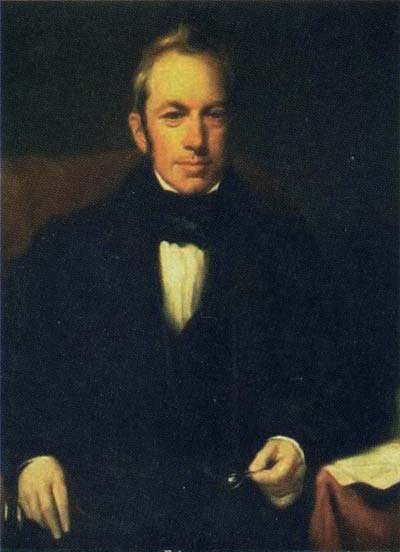
The history of cell biology is built on the discoveries of several scientists who gradually changed how people understood living organisms. Among them was Robert Brown, a Scottish botanist whose work had an important influence on the development of modern biology.
When people search for Robert Brown cell theory, they are often referring to Brown’s famous discovery of the cell nucleus and wondering whether he created or formulated the cell theory itself. The distinction is important. Robert Brown did not establish the complete cell theory. Instead, his observations provided an important piece of evidence that helped scientists better understand the internal organization of cells.
In 1831, Brown described a small, distinct structure inside the cells of orchid plants. He recognized that this structure was consistently present and gave it the name nucleus. His discovery became an important milestone in cell biology because it demonstrated that plant cells possessed a recognizable internal component rather than being simple, undifferentiated compartments.
Robert Brown is also famous for describing Brownian motion, the seemingly random movement of microscopic particles suspended in fluids. Although this discovery belongs primarily to physics and natural science rather than cell theory, it became enormously influential in later scientific research.
Understanding Brown’s work requires looking at the broader history of cell theory and seeing exactly where his discovery fits.
Who Was Robert Brown?
Robert Brown was a Scottish botanist born in 1773 in Montrose, Scotland. He developed an interest in natural history and eventually became one of the leading botanists of his era.
Brown studied plants extensively and participated in scientific expeditions that expanded European knowledge of plant species from different parts of the world.
His work was characterized by careful observation. Rather than simply classifying plants based on their visible characteristics, Brown investigated their microscopic structures and reproductive processes.
This attention to microscopic detail eventually led to one of his most important biological discoveries.
Robert Brown’s Scientific Background
Brown’s career developed during a period when microscopy was becoming increasingly important to biological research.
The invention and improvement of microscopes had allowed scientists to examine structures that could not be seen with the naked eye. However, the microscopic world was still poorly understood.
Scientists were beginning to recognize that plants and animals possessed microscopic structures called cells, but many questions remained about their organization and function.
Brown’s botanical investigations contributed to answering some of those questions.
What Did Robert Brown Discover?
Robert Brown is best known in cell biology for his identification of the cell nucleus.
While studying orchid plants and other plant tissues, Brown noticed a small, relatively distinct structure inside the cells. In 1831, he described this structure and recognized that it was a consistent component of plant cells.
He called it the nucleus.
This was an important scientific observation because it demonstrated that cells contained organized internal structures.
The Discovery of the Nucleus
The nucleus is one of the most important structures in many eukaryotic cells.
In modern biology, it is understood as the membrane-bound organelle that contains most of a eukaryotic cell’s genetic material. It plays a central role in regulating gene expression and coordinating many cellular activities.
Brown could not know the molecular functions of the nucleus because genetics and molecular biology had not yet developed. Nevertheless, his microscopic observations provided the foundation for recognizing the nucleus as a fundamental cellular structure.
His discovery therefore became an important step in the development of cell biology.
Did Robert Brown Create Cell Theory?
No. Robert Brown did not create the cell theory.
This is one of the most important points to understand when researching the phrase Robert Brown cell theory.
Cell theory developed through the combined work of several scientists.
In the 1660s, Robert Hooke examined cork under a microscope and used the word “cell” to describe the small compartments he observed.
Later, Matthias Schleiden proposed in 1838 that plants were composed of cells. In 1839, Theodor Schwann extended the cellular concept to animals.
These developments helped establish the basic principles of classical cell theory.
Much later, Rudolf Virchow contributed the principle that new cells arise from existing cells.
Robert Brown’s contribution came during this period of rapid development. His discovery of the nucleus added important knowledge about the internal structure of cells.
What Is Cell Theory?
Cell theory is one of the fundamental concepts of modern biology.
The classical version of cell theory can be summarized through three major ideas:
- All living organisms are composed of one or more cells.
- The cell is the basic structural and functional unit of life.
- All cells arise from pre-existing cells.
Modern cell theory has expanded these ideas considerably.
Scientists now understand that cells contain hereditary information, use energy, share fundamental chemical characteristics and maintain internal conditions necessary for life.
Robert Hooke and the Discovery of Cells
Robert Hooke played an early role in the history of cell biology.
In 1665, Hooke published Micrographia, a famous work containing microscopic observations. When he examined a thin slice of cork, he observed tiny compartments that reminded him of small rooms.
He called these compartments “cells.”
Importantly, the structures Hooke observed were the remains of dead plant cells rather than living cells in the modern sense.
Nevertheless, his terminology became central to biology.
Schleiden and Schwann
The development of cell theory accelerated in the nineteenth century.
German botanist Matthias Schleiden argued that plants were composed of cells. Around the same period, physiologist Theodor Schwann applied similar ideas to animals.
Their work helped establish the idea that cells form the basic structural basis of living organisms.
Robert Brown’s discovery of the nucleus occurred shortly before Schleiden and Schwann formally developed these major components of cell theory.
How Did Robert Brown’s Discovery Influence Cell Theory?
Brown’s discovery contributed to cell biology by revealing that cells had internal organization.
Before detailed microscopic research, cells could easily be imagined as relatively simple compartments.
The identification of the nucleus showed that cells contained distinct structures with recognizable characteristics.
This helped scientists move toward a more sophisticated understanding of cellular organization.
The Cell Was More Than a Simple Compartment
Modern biology shows that cells contain numerous structures, including:
- Nucleus
- Mitochondria
- Ribosomes
- Endoplasmic reticulum
- Golgi apparatus
- Lysosomes
- Cytoskeleton
Plant cells also contain structures such as chloroplasts and large central vacuoles.
Brown’s identification of the nucleus was an early step toward understanding this complex internal architecture.
Robert Brown and Plant Cells
Brown’s botanical research was particularly important because plants provided excellent material for microscopic study.
Plant cells have relatively rigid cell walls, which can make their structures easier to observe under a microscope.
While examining orchids and other plants, Brown noticed that the nucleus appeared as a distinctive body inside the cell.
His observations were significant because they were based on repeated microscopic examination rather than a single unusual specimen.
This helped establish the nucleus as a general cellular feature rather than an accidental structure.
Robert Brown and Brownian Motion
Robert Brown’s scientific legacy extends beyond cell biology.
He is also associated with Brownian motion, the random movement of microscopic particles suspended in a fluid.
In 1827, while examining pollen grains suspended in water, Brown observed that tiny particles moved continuously and irregularly.
Initially, this behavior was not fully understood.
Why Brownian Motion Became Important
Brownian motion later became important in physics because it provided evidence for the existence and movement of molecules.
In 1905, Albert Einstein published a theoretical explanation of Brownian motion that helped demonstrate how microscopic molecular motion could produce the observable movement of particles.
Later experimental work further strengthened the atomic and molecular theory of matter.
Thus, Brown’s observations eventually influenced both biology and physics.
Why Is the Cell Nucleus Important?
The nucleus is a key feature of eukaryotic cells.
It contains most of the cell’s DNA, which carries genetic instructions.
The nucleus is surrounded by a nuclear envelope containing nuclear pores. These pores regulate the movement of certain molecules between the nucleus and cytoplasm.
Inside the nucleus, DNA is organized with proteins into chromatin.
The Nucleus and Genetic Information
Modern genetics has shown why Brown’s discovery was so important.
DNA contains instructions used by cells to produce proteins and regulate biological processes.
The nucleus therefore serves as a major center for storing and managing genetic information in eukaryotic organisms.
Brown did not know about DNA or genes when he identified the nucleus. Those discoveries came much later.
Nevertheless, his observation provided scientists with a structural feature that became central to later research into heredity and cellular function.
Robert Brown’s Place in the History of Biology
Robert Brown occupies an interesting position in the history of cell biology.
He was not the founder of cell theory, but his work helped scientists understand what cells actually contain.
A simplified historical sequence looks like this:
1665: Robert Hooke
Hooke observes cork under a microscope and introduces the term “cell.”
1831: Robert Brown
Brown describes the cell nucleus while studying plant tissues.
1838: Matthias Schleiden
Schleiden argues that plants are composed of cells.
1839: Theodor Schwann
Schwann extends cellular principles to animals.
1850s: Rudolf Virchow
Virchow emphasizes that cells arise from existing cells.
Together, these developments contributed to the modern concept of cell theory.
Common Misunderstandings About Robert Brown Cell Theory
The phrase “Robert Brown cell theory” can sometimes create confusion.
Brown Did Not Formulate the Three-Part Cell Theory
The three classical principles of cell theory are not generally credited to Robert Brown.
Instead, cell theory emerged through the combined contributions of multiple scientists.
Brown’s major contribution was the discovery and description of the nucleus.
Brown’s Nucleus Discovery Was Still Highly Significant
Not being the founder of cell theory does not make Brown’s contribution unimportant.
The nucleus became one of the most important structures identified in early cell biology.
His observation helped establish that cells possessed internal structures that could be studied systematically.
Frequently Asked Questions
1. What did Robert Brown contribute to cell theory?
Robert Brown contributed to cell biology by discovering and describing the cell nucleus in plant cells. His discovery helped scientists understand that cells have organized internal structures.
2. Did Robert Brown discover the cell?
No. Robert Hooke is traditionally credited with introducing the term “cell” after examining cork in 1665. Brown later made the important discovery of the cell nucleus.
3. Who developed cell theory?
Cell theory developed through the work of several scientists. Robert Hooke, Matthias Schleiden, Theodor Schwann and Rudolf Virchow are among the major historical figures associated with its development.
4. When did Robert Brown discover the nucleus?
Robert Brown described the nucleus in 1831 while studying plant material, particularly orchids.
5. What else is Robert Brown famous for?
Robert Brown is also famous for observing Brownian motion, the irregular movement of microscopic particles suspended in fluids. His observations later became important to molecular physics.
Conclusion
The phrase Robert Brown cell theory refers to an important chapter in the history of cell biology, but it should not be interpreted as meaning that Robert Brown personally created cell theory.
Brown’s major biological contribution was his discovery and description of the cell nucleus in 1831. This finding revealed that cells possessed recognizable internal organization and became an important milestone in the development of modern biology.
Cell theory itself emerged through the combined efforts of scientists including Robert Hooke, Matthias Schleiden, Theodor Schwann and Rudolf Virchow. Each contributed different pieces to a larger scientific picture.
Brown’s work demonstrates how scientific knowledge develops gradually. A single microscopic observation can become extremely influential when later generations of scientists build upon it.
Today, the nucleus is recognized as a central component of eukaryotic cells, and cell theory remains one of biology’s foundational principles. Robert Brown’s careful observations helped move science closer to that modern understanding, securing his place in the history of cell biology.