Think you’re good at solving puzzles? Tricky riddles with answers are a great way to test that confidence. Unlike straightforward questions, tricky riddles are designed to make you think beyond the obvious. They use wordplay, unexpected interpretations, clever logic, and sometimes deliberately misleading wording to make a simple answer seem complicated.
The fun comes from that moment when the answer is revealed and you realize it was right in front of you all along.
These riddles are perfect for family gatherings, classroom activities, parties, road trips, social media posts, or simply challenging yourself when you have a few spare minutes. Some are easy enough for children, while others can leave even adults thinking for several minutes.
Below is a collection of tricky riddles with answers, followed by useful tips for becoming a better riddle solver.
Why Are Tricky Riddles So Challenging?
A tricky riddle usually does not require advanced mathematics or specialist knowledge. Instead, it challenges the way you interpret information.
The wording may encourage you to make an assumption that turns out to be incorrect.
For example:
What gets wetter the more it dries?
The obvious reaction is confusion. How can something become wetter while drying something else?
The answer is a towel.
The towel gets wetter as it dries another object.
This type of reversal is one of the most common techniques used in clever riddles.
100+ Tricky Riddles With Answers
Try solving each riddle before looking at the answer. If you’re sharing these with someone else, pause after every question and give them time to think.
Easy Tricky Riddles
1. What Has Hands but Cannot Clap?
Answer: A clock.
It has hands that show the time, but they certainly cannot applaud.
2. What Has a Face but No Eyes?
Answer: A clock.
The “face” is the front of the clock.
3. What Has Teeth but Cannot Bite?
Answer: A comb.
Its teeth are useful for arranging hair rather than chewing food.
4. What Has a Neck but No Head?
Answer: A bottle.
The narrow upper part is called its neck.
5. What Has One Eye but Cannot See?
Answer: A needle.
The eye is the hole through which thread passes.
6. What Has Legs but Cannot Walk?
Answer: A table.
Its legs hold it up, but they cannot take it anywhere.
7. What Can Travel Around the World While Staying in One Corner?
Answer: A stamp.
A stamp can travel thousands of miles while remaining attached to the corner of an envelope.
8. What Gets Wetter as It Dries?
Answer: A towel.
The towel absorbs water while drying something else.
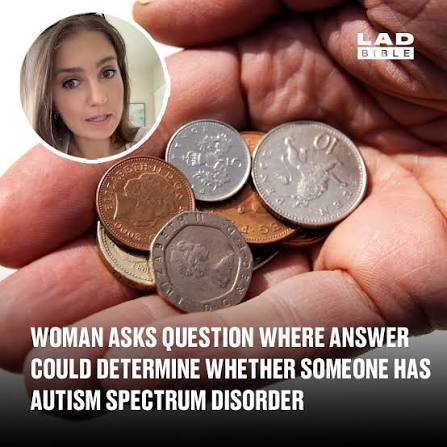
9. What Has a Head and a Tail but No Body?
Answer: A coin.
A coin has a heads side and a tails side.
10. What Has Keys but Cannot Open Locks?
Answer: A piano.
Its keys produce music instead of unlocking doors.
Tricky Riddles for Kids
Children often enjoy riddles because they turn ordinary objects into little mysteries.
11. What Can Jump Higher Than a Building?
Answer: Anything that can jump. Buildings cannot jump.
The trick is that the question never says the object has to jump over the building.
12. What Has Ears but Cannot Hear?
Answer: A cornfield.
Corn has “ears,” but they obviously cannot listen.
13. What Room Has No Doors or Windows?
Answer: A mushroom.
The answer is hidden in the word itself.
14. What Goes Up but Never Comes Down?
Answer: Your age.
Every birthday adds another year.
15. What Has a Thumb and Four Fingers but Is Not Alive?
Answer: A glove.
It resembles a hand but cannot move independently.
16. What Is Full of Holes but Can Still Hold Water?
Answer: A sponge.
Its porous structure allows it to absorb and retain water.
17. What Has a Bark but No Bite?
Answer: A tree.
Its bark is part of its outer surface.
18. What Has a Tongue but Cannot Talk?
Answer: A shoe.
A shoe’s tongue is the flap underneath the laces.
19. What Has a Spine but No Bones?
Answer: A book.
A book has a spine that holds its pages together.
20. What Has a Bed but Never Sleeps?
Answer: A river.
A riverbed is the channel in which the river flows.
Tricky Riddles for Adults
These riddles rely more heavily on wordplay and logic.
21. What Can Be Broken Without Being Touched?
Answer: A promise.
You can break a promise simply by failing to keep it.
22. What Belongs to You but Other People Use More Than You Do?
Answer: Your name.
Other people often say your name when talking to you.
23. What Question Can You Never Answer Yes To?
Answer: “Are you asleep?”
If you are actually asleep, you cannot answer.
24. What Has Cities but No Houses, Forests but No Trees, and Rivers but No Water?
Answer: A map.
It represents all those things without physically containing them.
25. What Can You Catch but Never Throw?
Answer: A cold.
You can catch one, but you cannot toss it to someone else.
26. What Runs but Never Walks?
Answer: Water.
Water can run through a river or pipe without having legs.
27. What Has a Mouth but Cannot Eat?
Answer: A river.
The mouth is where a river empties into another body of water.
28. What Is Always in Front of You but Cannot Be Seen?
Answer: The future.
You can plan for it, but you cannot literally see it.
29. What Has Branches but No Leaves?
Answer: A bank.
Banks can have branches in different locations.
30. What Has Many Words but Never Speaks?
Answer: A book.
Its words communicate ideas without producing a voice.
Hard Tricky Riddles
Ready for something more difficult? Try these without immediately scrolling to the answers.
31. A Man Shaves Several Times a Day, Yet He Still Has a Beard. Who Is He?
Answer: A barber.
He shaves other people rather than himself.
32. A Plane Crashes on the Border Between Two Countries. Where Do They Bury the Survivors?
Answer: They don’t bury survivors.
The trick is in the word “survivors.”
33. How Many Months Have 28 Days?
Answer: All twelve.
Every month has at least 28 days.
34. If You Have Me, You Want to Share Me. If You Share Me, You No Longer Have Me. What Am I?
Answer: A secret.
Once you tell someone, it is no longer yours alone.
35. What Five-Letter Word Becomes Shorter When You Add Two Letters?
Answer: “Short.”
Adding “er” makes “shorter.”
36. What Word Is Pronounced Wrong in Every Dictionary?
Answer: “Wrong.”
The riddle is referring to the word itself.
37. What Can You Hold in Your Right Hand but Never in Your Left?
Answer: Your left hand.
You can physically hold your left hand with your right hand, but not your right hand with your left in the same way.
38. What Happens Once in a Minute, Twice in a Moment, but Never in a Thousand Years?
Answer: The letter M.
There is one M in “minute,” two in “moment,” and none in “thousand years.”
39. What Starts With E, Ends With E, and Contains One Letter?
Answer: An envelope.
It starts and ends with E and contains a letter.
40. What Has 13 Hearts but No Other Organs?
Answer: A deck of cards.
There are 13 hearts in a standard deck.
Funny Tricky Riddles
Sometimes the best tricky riddles are the ones that make you laugh after you hear the answer.
41. Why Did the Bicycle Fall Over?
Answer: Because it was two-tired.
42. Why Was the Math Book Sad?
Answer: Because it had too many problems.
43. What Do You Call a Sleeping Bull?
Answer: A bulldozer.
44. Why Don’t Skeletons Fight?
Answer: They don’t have the guts.
45. What Kind of Band Never Plays Music?
Answer: A rubber band.
46. What Do You Call Cheese That Isn’t Yours?
Answer: Nacho cheese.
47. Why Did the Computer Go to the Doctor?
Answer: Because it had a virus.
48. What Do You Call a Fish Without Eyes?
Answer: Fsh.
Remove the “i” from “fish.”
49. What Has Four Wheels and Flies?
Answer: A garbage truck.
The flies are insects, not wings.
50. Why Can’t Your Nose Be 12 Inches Long?
Answer: Because then it would be a foot.
Logic-Based Tricky Riddles
Not every tricky riddle depends on wordplay. Some require you to examine the information carefully.
51. You Have Three Apples and Take Away Two. How Many Do You Have?
Answer: Two.
You took two, so you have those two.
52. A Farmer Has 17 Sheep. All but Nine Run Away. How Many Remain?
Answer: Nine.
“All but nine” means nine stayed.
53. If an Electric Train Is Traveling North, Which Way Does Its Smoke Go?
Answer: Nowhere.
Electric trains do not produce smoke in the traditional sense.
54. What Is Heavier: A Pound of Feathers or a Pound of Bricks?
Answer: Neither. They both weigh one pound.
The objects have different densities, but the same stated weight.
55. You Enter a Dark Room With One Match. There Is a Candle, a Lamp, and a Fireplace. What Do You Light First?
Answer: The match.
You need the match before you can light anything else.
How to Solve Tricky Riddles
Getting better at riddles is not just about knowing lots of answers. It is about learning how to interpret language.
Read Every Word Carefully
Riddle writers often hide the key clue in a seemingly ordinary word.
Words such as “all,” “only,” “before,” “after,” “take,” and “remain” can completely change the answer.
Question Your Assumptions
When a riddle seems obvious, stop and ask yourself:
Am I assuming something that the question never actually said?
This is one of the most valuable habits for solving tricky puzzles.
Look for Multiple Meanings
English contains many words with multiple meanings.
“Bark,” “head,” “foot,” “mouth,” “bank,” and “key” can all describe more than one thing.
If a riddle sounds strange, look for a different meaning of one of its key words.
Don’t Overcomplicate Simple Questions
Another common mistake is assuming that every riddle requires advanced logic.
Sometimes the answer is incredibly simple.
The challenge is recognizing why the question was worded in a particular way.
Why Tricky Riddles Are Good Brain Teasers
Riddles can be entertaining, but they also encourage useful mental habits.
They Encourage Flexible Thinking
A riddle often requires you to abandon your first interpretation and consider another possibility.
They Improve Attention to Language
Careful reading matters. A single word can completely change a puzzle.
They Encourage Problem-Solving
Even short riddles require you to collect information, form possibilities, and eliminate incorrect answers.
They Make Social Activities More Fun
Tricky riddles are easy to share with friends, children, coworkers, and family members.
You can turn them into a casual competition by giving points for correct answers.
How to Use Tricky Riddles in Games and Activities
Riddles can be used in many situations.
At Parties
Divide guests into teams and read riddles aloud. Give each team a limited amount of time to answer.
In Classrooms
Teachers can use age-appropriate riddles as warm-up activities. They can encourage students to explain how they reached an answer rather than simply guessing.
During Family Time
Choose a mixture of easy and difficult riddles so everyone has a chance to participate.
Online and Social Media
Short riddles work especially well in posts because people can leave their guesses in the comments.
Frequently Asked Questions
1. What are tricky riddles?
Tricky riddles are puzzles designed to challenge assumptions through clever wording, logic, wordplay, or unexpected interpretations.
2. Are tricky riddles suitable for kids?
Yes. Many are family-friendly, although the difficulty should be adjusted according to the child’s age and vocabulary.
3. What makes a riddle difficult?
A riddle becomes challenging when it uses misleading wording, multiple meanings, hidden clues, logical twists, or an answer that differs from the obvious interpretation.
4. How can I get better at solving riddles?
Read carefully, question your assumptions, look for words with multiple meanings, and consider simple interpretations before complicated ones.
5. Can riddles improve problem-solving skills?
Riddles can encourage flexible thinking, careful reading, logical reasoning, and creative problem-solving. They are particularly useful as short mental exercises.
Conclusion
Tricky riddles with answers are more than simple questions. They are miniature puzzles that challenge your assumptions, test your attention, and often reward you with a satisfying “aha!” moment.
Whether you prefer easy riddles for kids, difficult logic puzzles for adults, funny wordplay, or questions designed to catch you off guard, there is no shortage of ways to challenge your brain.
The best strategy is simple: slow down, read carefully, and don’t assume the question means exactly what you first think it means. Look for hidden meanings, unusual wording, and clues that seem insignificant.
And most importantly, have fun. A riddle isn’t really successful if it only makes you frustrated. The perfect tricky riddle makes you think hard, surprises you with the answer, and leaves you eager to try another one.