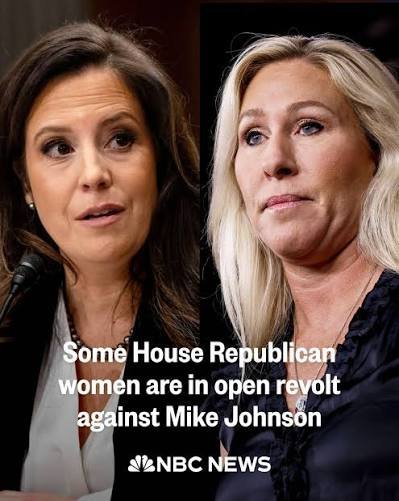
The phrase “Mike Johnson Republican revolt” has become a useful shorthand for a series of internal battles that have challenged the House speaker’s ability to move legislation through a narrowly divided Republican majority. In 2026, House Republicans have repeatedly disagreed over spending, election legislation, tariffs, surveillance policy, immigration funding, and the priorities of President Donald Trump.
These disputes are important because the House operates differently when the majority is extremely narrow. A speaker can have the support of most Republicans and still struggle to pass a bill if a relatively small group of members refuses to cooperate.
The latest major confrontation came in late June 2026, when Republican lawmakers opposed a procedural vote and effectively blocked House business. The dispute centered on demands to advance the SAVE America Act, a voter-identification and election-related proposal strongly backed by Trump. The standoff forced Johnson to cancel planned votes and send lawmakers home early for the July 4 recess.
But this was not an isolated event. Earlier revolts over tariffs, surveillance legislation, Department of Homeland Security funding, and other issues showed that Johnson has repeatedly faced pressure from different factions within his own party.
Who Is Mike Johnson?
Mike Johnson is a Republican congressman from Louisiana and Speaker of the U.S. House of Representatives.
As speaker, Johnson has the difficult responsibility of managing House Republicans while also working with the Senate, White House, and Democratic minority. His challenge is especially complicated when members of his own party disagree over how aggressively to pursue particular policies.
A House speaker is not simply responsible for supporting the president’s agenda. The speaker must also count votes, negotiate with members, schedule legislation, and protect the institution’s ability to conduct business.
That balancing act has become particularly difficult during the current Republican majority.
What Is the Mike Johnson Republican Revolt?
The term does not describe one formal organization or a single rebellion. Instead, it refers to recurring instances in which Republican House members have opposed Johnson and GOP leadership on major legislative or procedural decisions.
In several cases, Republicans have used procedural votes to demonstrate their opposition.
Normally, procedural votes are relatively predictable for the majority party. In the current House, however, a small number of Republicans can prevent leadership from advancing legislation.
Axios reported in April that Republicans had repeatedly used failed or threatened rule votes to pressure their own leadership and extract concessions.
Why Rule Votes Matter
A rule vote generally establishes the terms under which a bill will be debated.
Because the majority party traditionally controls these votes, leadership expects its members to support them.
When members of the majority vote against a rule, however, they can effectively stop the House from moving forward.
This gives individual lawmakers considerable leverage.
The Narrow-Majority Problem
A narrow majority creates a mathematical problem for any speaker.
If leadership can afford only a few defections, every disagreement becomes potentially significant.
That means Johnson must constantly balance competing groups, including:
- Conservative hardliners
- More moderate Republicans
- Members focused on fiscal issues
- Members closely aligned with Trump
- Republicans concerned about reelection
- Members who prioritize congressional authority
The result is a Republican conference that may agree on broad principles while disagreeing sharply over individual bills.
The June 2026 Revolt Over the SAVE Act
The most dramatic recent confrontation occurred in late June.
Republican lawmakers opposed to Johnson’s legislative strategy blocked a procedural vote that was necessary for House business. Their primary demand involved the SAVE America Act, a strict voter-identification proposal championed by President Trump.
The dispute was serious enough that Johnson canceled planned votes and sent lawmakers home early for the Independence Day recess. The move also delayed other legislation, including the annual defense policy bill.
Why the SAVE Act Became a Flashpoint
The SAVE Act had already become a major political issue among Republicans.
Trump and conservative lawmakers argued that stronger identification and citizenship requirements were necessary to protect election integrity.
Other lawmakers questioned the legislative strategy and whether attaching the measure to unrelated legislation was the best way to move it forward.
The disagreement was therefore not simply about election policy. It was also about how Congress should operate and how much leverage individual lawmakers should have over leadership.
Republicans Versus Republicans
The June conflict demonstrated an unusual political dynamic.
Democrats were not the only obstacle facing Johnson. Republican lawmakers themselves were preventing their leadership from advancing its preferred agenda.
That distinction is important when discussing the Mike Johnson Republican revolt.
The central conflict was inside the Republican conference.
Earlier Republican Revolts Against Johnson
The June confrontation followed several other disputes.
The February Tariff Revolt
In February 2026, several House Republicans opposed leadership’s attempt to restrict lawmakers’ ability to force votes concerning President Trump’s tariffs.
Axios reported that Thomas Massie, Kevin Kiley, and Don Bacon voted against a procedural measure, helping defeat it.
Bloomberg similarly reported that Republican opposition threatened to derail the House’s legislative schedule because of language concerning tariff-related votes.
This episode revealed an important divide within the GOP.
Some Republicans were willing to challenge the administration’s economic policies and defend Congress’s authority over trade.
The April FISA and DHS Battles
In April, Johnson faced another series of internal Republican disputes.
House Republicans were dealing with several major issues at once, including surveillance authorities, Department of Homeland Security funding, and agricultural policy.
The Washington Post reported that Johnson had to manage multiple internal revolts in a single day, including opposition from conservatives concerned about privacy and other Republicans focused on policy provisions in the farm bill.
The situation demonstrated just how difficult it can be to build a unified coalition inside a narrowly divided conference.
Why Are House Republicans Divided?
It would be misleading to describe every Republican disagreement as the same kind of rebellion.
Different lawmakers have different motivations.
Conservative Ideological Concerns
Some Republicans believe Johnson and party leadership should push more aggressively for conservative policies.
These members may be willing to block legislation if they believe leadership is compromising too much.
Concerns About Congressional Authority
Other Republicans have focused on the constitutional role of Congress.
The tariff dispute, for example, showed that some members were uncomfortable with restrictions that prevented lawmakers from forcing votes on presidential trade policies.
This creates a complicated dynamic because a lawmaker can strongly support Trump while still opposing a particular administration policy or congressional procedure.
Political Survival
Members also have to consider their own districts.
A policy popular with the Republican base nationally may not necessarily be the most politically advantageous position in every congressional district.
With elections approaching, lawmakers can become particularly sensitive to issues involving taxes, spending, immigration, healthcare, trade, and the economy.
The Role of Donald Trump
The relationship between President Trump and House Republicans is another important part of the story.
Johnson has generally been closely aligned with Trump, but that does not mean every Republican automatically supports every presidential priority.
The FISA fight illustrated this tension. Axios reported in April that Trump failed to rally enough House Republicans behind the administration’s preferred approach to extending surveillance authority, producing a rare setback.
This creates a challenge for Johnson.
He must maintain a productive relationship with the White House while also maintaining enough support among House Republicans to pass legislation.
Supporting Trump Is Not the Same as Supporting Every Strategy
Republican lawmakers can broadly support Trump’s agenda while disagreeing over:
- Timing
- Legislative procedure
- Spending
- Constitutional authority
- Policy details
- Political priorities
That distinction helps explain why internal Republican revolts can occur even when Trump remains highly influential within the party.
What the Revolt Means for Mike Johnson
Repeated rebellions create several problems for a speaker.
Legislative Delays
When procedural votes fail, other bills can be delayed even if they have broad support.
The June revolt, for example, affected the defense authorization process and other scheduled legislation.
Pressure on Leadership
Every failed vote can make leadership appear weaker.
Johnson must demonstrate that he can negotiate with dissatisfied Republicans while still delivering results.
Greater Power for Individual Members
Perhaps the biggest consequence is that individual lawmakers can gain leverage.
If leadership knows that a handful of members can shut down the House, those members have an incentive to use that power to demand concessions.
This can create a cycle in which future disagreements become more difficult to resolve.
Is This a Threat to Johnson’s Speakership?
A Republican revolt does not automatically mean that Johnson will lose the speakership.
Leadership challenges require lawmakers to take additional procedural and political steps, and internal disagreements do not necessarily translate into an effort to remove the speaker.
The more immediate concern is whether Johnson can keep enough Republicans together to govern effectively.
His challenge is therefore less about eliminating disagreement and more about managing disagreement.
The McCarthy Comparison
The history of recent House Republican leadership provides an important comparison.
Former Speaker Kevin McCarthy faced intense internal opposition before losing the speakership in 2023.
That history makes Republican leadership particularly sensitive to the possibility of another internal rebellion.
Johnson has therefore had to navigate a political environment in which members know that leadership can be challenged from within the majority.
What Happens Next?
The future of the Republican revolt depends on several factors.
1. Can Johnson Find Compromises?
Johnson may need to negotiate with conservative members over election legislation, spending, immigration, and other priorities.
2. Will Trump Continue Pressuring Congress?
The White House remains an important influence on Republican lawmakers.
If Trump strongly prioritizes a particular bill, Johnson may face additional pressure to move it.
3. Will Republicans Prioritize Governing or Campaigning?
As elections approach, lawmakers may become increasingly focused on issues that matter to voters.
This can make compromise more difficult.
4. Can the House Pass Major Legislation?
Ultimately, the most important measure of Johnson’s leadership will be whether the House can conduct regular business.
Frequently Asked Questions
1. What is the Mike Johnson Republican revolt?
The phrase describes recurring instances in which House Republicans have opposed Speaker Mike Johnson and GOP leadership, sometimes blocking procedural votes and delaying legislation.
2. Why did Republicans revolt against Mike Johnson in June 2026?
The June conflict centered largely on demands to advance the SAVE America Act, a voter-identification measure backed by President Trump. Republican opposition blocked House business and contributed to an early recess.
3. Is the Republican revolt against Mike Johnson a single movement?
No. Different Republican lawmakers have challenged Johnson over different issues, including tariffs, surveillance, spending, immigration funding, and election legislation.
4. Has Johnson faced Republican opposition before?
Yes. Johnson encountered major internal disagreements in February and April 2026, including disputes over tariff-related voting procedures and surveillance legislation.
5. Does the Republican revolt mean Mike Johnson will lose his position?
Not necessarily. Internal rebellion can weaken a speaker without immediately threatening his position. The bigger issue is whether Johnson can maintain enough support to keep the House functioning and pass legislation.
Conclusion
The Mike Johnson Republican revolt reflects a broader struggle inside the House GOP over policy, procedure, presidential influence, and the role of individual lawmakers.
The June 2026 confrontation over the SAVE America Act was particularly significant because Republican lawmakers themselves helped bring House business to a standstill.
But the conflict did not begin in June. Earlier disputes over tariffs, FISA, DHS funding, and other issues showed that Johnson has been managing an unusually difficult Republican majority for months.
For Johnson, the central challenge is not simply winning votes on individual bills. It is maintaining a workable coalition among Republicans who may agree on the party’s broad goals but disagree about priorities and tactics.
The continuing Republican revolt therefore offers a revealing look at the realities of governing with a narrow House majority. Every faction has leverage, every procedural vote matters, and the speaker must constantly balance loyalty to the administration with the competing demands of his own members.
As Congress moves toward another election cycle, Johnson’s ability to manage those divisions could determine how much of the Republican agenda actually becomes law.