The Academy Award for Best Actress in a Supporting Role is one of Hollywood’s most respected honors for female performers whose work stands out in a supporting performance. Although supporting actors may not always receive the same amount of screen time as leading characters, a memorable performance can dramatically influence a film’s emotional impact, storytelling, and critical reception.
Presented by the Academy of Motion Picture Arts and Sciences, the award recognizes an actress whose performance in a supporting role is considered outstanding during a particular awards season. Over the decades, the category has celebrated performers from a wide range of films, genres, and generations.
The award has also become an important part of the history of the Academy Awards. Some winners have been established stars, while others received recognition after delivering breakthrough performances that changed the direction of their careers.
What Is the Academy Award for Best Actress in a Supporting Role?
The Academy Award for Best Actress in a Supporting Role honors a female performer for an outstanding supporting performance in a feature film.
Unlike the Best Actress category, which generally recognizes performances in leading roles, the supporting actress category focuses on performances that occupy a secondary position within a movie’s overall narrative.
A supporting role does not necessarily mean that the character is unimportant. In many successful films, supporting characters are essential to the plot. They can provide humor, conflict, emotional depth, historical context, or a different perspective on the main character.
The Academy’s recognition of these performances demonstrates that screen time alone does not determine the importance or quality of an acting performance.
History of the Supporting Actress Oscar
The Academy introduced the supporting actress category at the 9th Academy Awards, honoring films released during the 1935–36 period.
Before the introduction of supporting acting categories, the Academy’s acting awards did not formally separate leading and supporting performances. The creation of dedicated supporting categories allowed the organization to recognize performers who made significant contributions without playing the principal character.
Since its introduction, the award has become an established part of the annual Oscars ceremony.
The category has evolved alongside Hollywood itself. As filmmaking styles and storytelling techniques have changed, supporting performances have become increasingly diverse. Actresses have been recognized for work in dramas, comedies, historical films, biographical movies, thrillers, musicals, and other genres.
How the Academy Award Category Works
The Academy Awards follow a structured voting process. Members of the Academy participate in different stages of nominations and final voting.
Eligibility
For a performance to be considered, the film must meet the Academy’s eligibility requirements for the relevant awards year. These rules can change over time, so specific eligibility conditions depend on the particular Oscar season.
The performance must also qualify as a supporting performance rather than a leading one.
Nominations
Members of the Academy’s acting branch participate in the nomination process. Performances are evaluated alongside other eligible performances from the same awards cycle.
After the nominations are announced, the nominees receive significant attention from critics, audiences, filmmakers, and awards analysts.
Final Voting
Once nominations are finalized, eligible Academy members vote to determine the winner.
The actress receiving the required winning vote becomes the recipient of the Academy Award for Best Actress in a Supporting Role.
Why Supporting Performances Matter
Supporting characters can sometimes be the most memorable part of a film.
A supporting actress may have fewer scenes than the lead performer, but her character can still provide the emotional foundation of a story. For example, a supporting character might be a parent guiding the protagonist, a friend challenging the main character, a rival creating conflict, or a historical figure who changes the direction of the plot.
Strong supporting performances can also make fictional worlds feel more authentic.
Creating Emotional Depth
A well-developed supporting character can reveal information about the protagonist that would otherwise remain hidden.
The interaction between characters can communicate family relationships, personal conflicts, cultural expectations, or emotional struggles without requiring lengthy exposition.
Elevating the Story
An exceptional supporting actress can make scenes more compelling simply through timing, facial expressions, voice, and body language.
These details often become particularly important in dramatic films where subtle performances can have a major effect.
Making Characters Memorable
Some supporting characters become cultural icons even when they are not the central focus of a movie.
This is one reason the supporting actress category remains so important. It acknowledges that memorable cinema is often created through an ensemble of performances rather than a single star.
Notable Winners Through the Years
The history of the Academy Award for Best Actress in a Supporting Role includes many acclaimed performers.
Gale Sondergaard
Gale Sondergaard became the first recipient of the supporting actress Oscar, winning for Anthony Adverse at the 9th Academy Awards.
Her victory established the new category during a period when Hollywood was developing the modern awards system.
Hattie McDaniel
Hattie McDaniel made history by winning the Academy Award for her supporting performance in Gone with the Wind.
Her Oscar was a landmark moment in Academy Awards history. McDaniel became the first Black performer to win an Academy Award.
Her career and legacy remain subjects of considerable historical discussion.
Anne Baxter
Anne Baxter won the supporting actress Oscar for The Razor’s Edge. She had already established herself as a major performer, demonstrating how the category can recognize both rising talents and experienced actors.
Tatum O’Neal
One of the most memorable victories came when Tatum O’Neal won for Paper Moon.
Her performance became especially notable because of her age. She remains one of the youngest Oscar winners in history, and her victory demonstrated the Academy’s willingness to recognize exceptional performances regardless of traditional expectations surrounding age and experience.
Whoopi Goldberg
Whoopi Goldberg won Best Supporting Actress for Ghost. Her performance as Oda Mae Brown combined comedy, personality, and emotional moments, making the character one of the movie’s most recognizable elements.
The victory also represented an important milestone in Goldberg’s already influential career.
Viola Davis
Viola Davis won the award for Fences, delivering a performance widely praised for its emotional power.
Her Oscar victory added another major achievement to a career known for acclaimed work across film, television, and theater.
Ariana DeBose
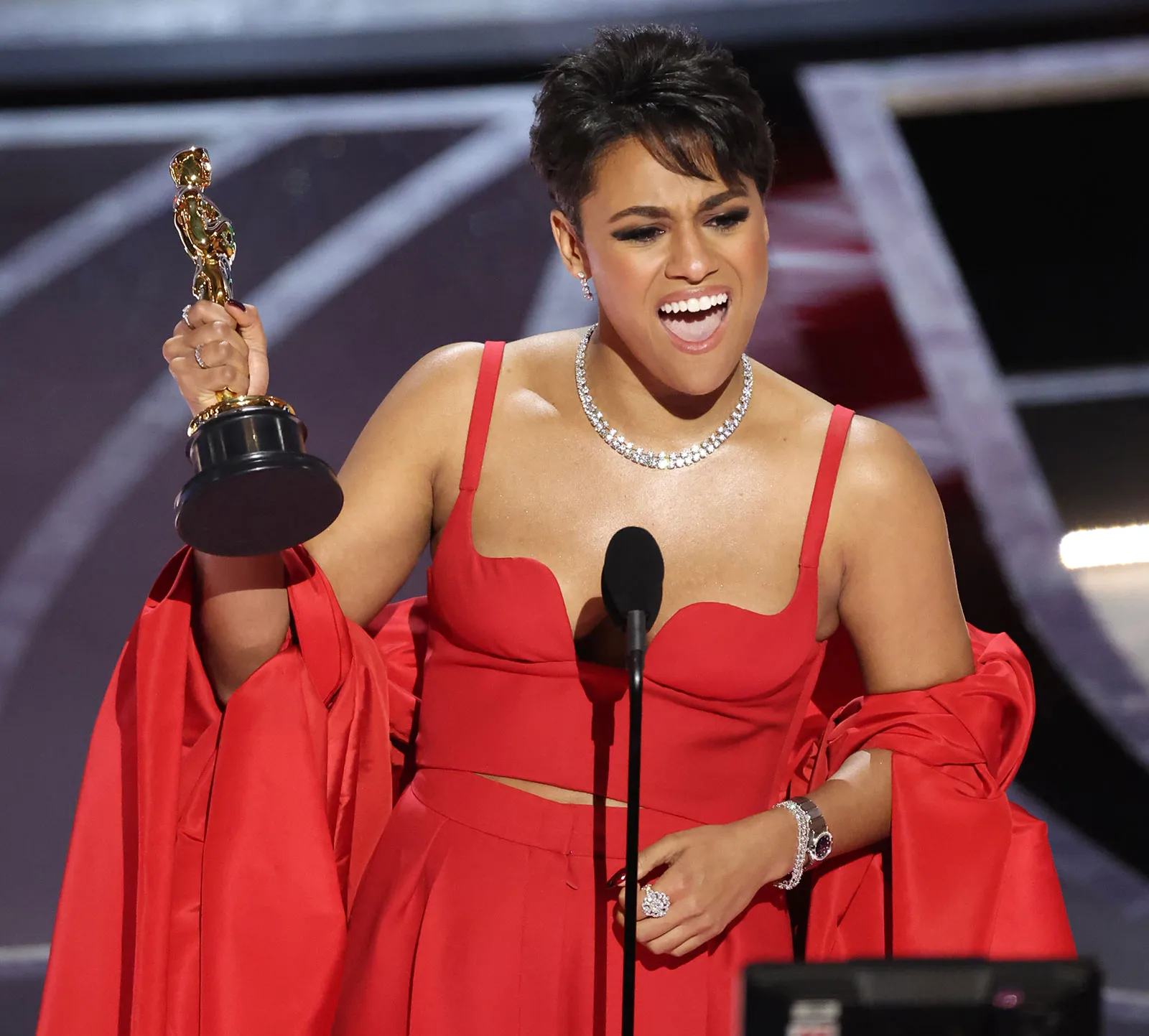
Ariana DeBose won for her performance as Anita in West Side Story.
Her victory brought attention to a new generation of performers and demonstrated the continued ability of the supporting actress category to recognize dynamic performances in musical and dramatic cinema.
Supporting Actress vs. Best Actress
One common question is how the supporting actress award differs from the Academy Award for Best Actress.
The key distinction is the nature of the role.
Best Actress generally recognizes the leading female performance in a film, while Best Supporting Actress recognizes an outstanding performance in a supporting role.
However, the boundary between leading and supporting performances is not always simple.
Some films feature ensemble casts in which several characters have substantial importance. Determining whether a performance belongs in the lead or supporting category can therefore become a topic of discussion during awards season.
The Importance of an Oscar Nomination
Winning the Academy Award is the highest achievement associated with the category, but receiving a nomination can also have a significant effect on an actress’s career.
An Oscar nomination can increase visibility, attract new opportunities, and introduce an actress’s work to audiences who may not have previously followed her career.
For emerging performers, recognition from the Academy can be particularly valuable.
It can lead to:
- More prominent film roles
- Greater industry recognition
- Increased media attention
- Opportunities to work with major directors
- Stronger negotiating power
- Long-term career visibility
Of course, an Oscar nomination does not guarantee continued success. Careers develop through many factors, including talent, project selection, industry relationships, and changing audience interests.
What Makes a Supporting Performance Oscar-Worthy?
There is no single formula for winning the Academy Award for Best Actress in a Supporting Role.
However, many acclaimed performances share several characteristics.
Emotional Authenticity
An actress must make the audience believe in her character. Authentic emotional reactions can turn a supporting role into one of the film’s most powerful elements.
Strong Character Development
Even with limited screen time, an actress can create a character with a distinct personality, history, motivations, and emotional journey.
Memorable Screen Presence
Some performances command attention whenever the character appears. This does not necessarily mean being loud or dramatic. Subtlety can be equally effective.
Contribution to the Film
The strongest supporting performances usually enhance the entire movie rather than existing independently from its central story.
The Role of the Oscars in Hollywood
The Academy Awards have enormous cultural influence. Every year, audiences follow nominations, predictions, red-carpet appearances, acceptance speeches, and winners.
The supporting actress category contributes to that conversation by highlighting performers who might otherwise receive less attention than the main stars of a film.
It also provides an opportunity for the Academy to celebrate different types of acting. A supporting performance can be funny, heartbreaking, frightening, understated, energetic, or deeply complex.
Over time, these performances become part of Oscar history.
Frequently Asked Questions
1. What is the Academy Award for Best Actress in a Supporting Role?
It is an Oscar presented to recognize an outstanding female supporting performance in a feature film.
2. When was the supporting actress Oscar introduced?
The category was introduced at the 9th Academy Awards, recognizing films from the 1935–36 awards period.
3. Who was the first winner of Best Supporting Actress?
Gale Sondergaard was the first winner of the Academy Award for Best Actress in a Supporting Role, winning for Anthony Adverse.
4. Is Best Supporting Actress different from Best Actress?
Yes. Best Actress generally recognizes a leading female performance, while Best Supporting Actress recognizes a performance in a supporting role.
5. Can a supporting actress become more famous after winning an Oscar?
Yes. An Oscar win can increase an actress’s visibility and potentially create new professional opportunities, although long-term success depends on many factors.
Conclusion
The Academy Award for Best Actress in a Supporting Role celebrates an essential part of filmmaking: the performers who bring secondary characters to life and make stories richer, more emotional, and more memorable.
From the category’s early years to today’s diverse Hollywood landscape, its winners have represented many different generations, acting styles, and cinematic traditions. Performers such as Hattie McDaniel, Tatum O’Neal, Whoopi Goldberg, Viola Davis, and Ariana DeBose illustrate how a supporting role can become a defining achievement in an acting career.
Ultimately, the value of a supporting performance cannot be measured simply by the number of scenes or minutes on screen. The best supporting actresses create characters that audiences remember long after the credits roll. That lasting impact is exactly what makes this Oscar category such an important part of Academy Awards history.